November 26, 2025
Highlights from National Symposium – Tackling Non-Response in Cohort and Survey Studies
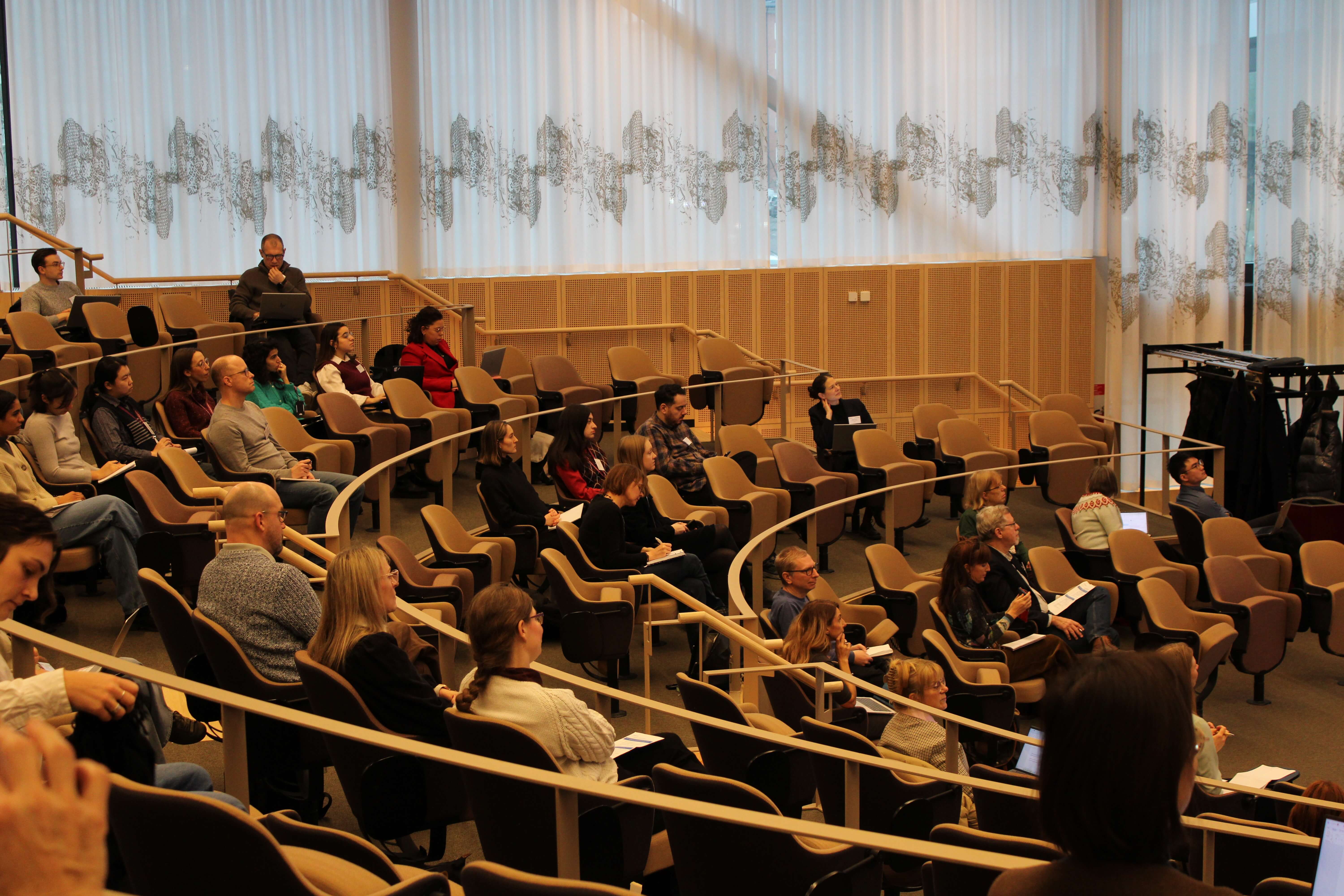
Photo: Maria Yohuang
On November 26, the NEAR and REWHARD infrastructures brought together researchers and stakeholders at Karolinska Institutet for a well-attended symposium on one of the most pressing challenges in research: non-response in cohort and survey studies. After an initial welcome from Debora Rizzuto of NEAR and Martin Hällsten of REWHARD, the symposium featured leading experts who shared the causes, solutions, and practical strategies for overcoming this issue.
The morning session, entitled “Understand the Drop in Response Rate: Causes and Solutions,” was led by Chair Serhiy Dekhtyar, during which Sebastian Lundmark addressed why response rates have declined, how to improve them, and the role of incentives in study participation. This was followed by Dan Hedlin, who spoke about how we can statistically address non-response rates.
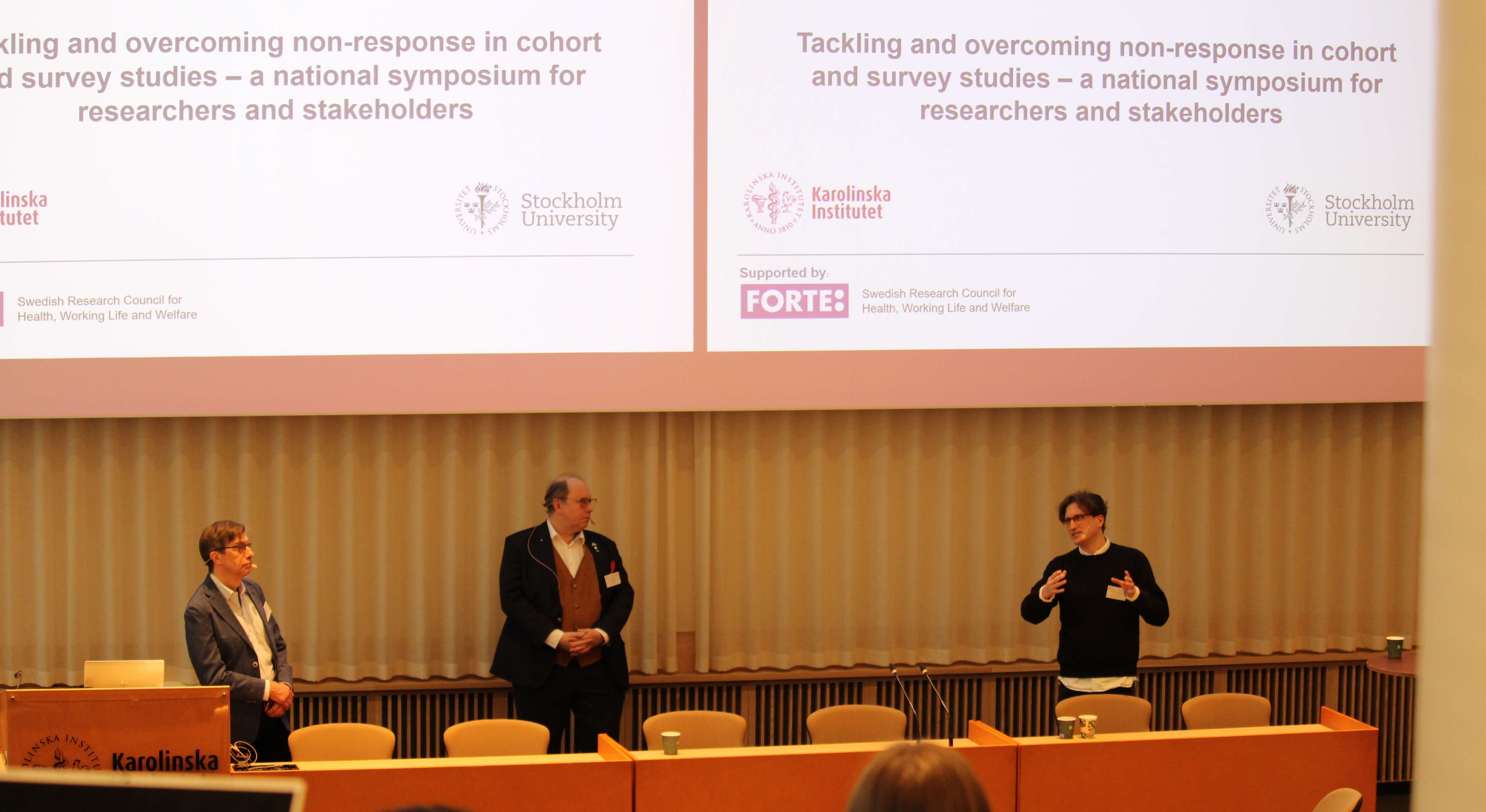
Dan Hedlin, Hugo Westerlund, and Sebastian Lundmark. Photo: Maria Yohuang.
The afternoon session addressed experiences with managing non-response in cohort studies and surveys led by Chair Carin Lennartsson. In this session, practical experiences from major population studies were discussed. From a national perspective, Amaia Caldéron-Larrañaga and Sölve Elmståhl presented how they have addressed non-response rates in the Swedish National Study on Aging and Care (SNAC), followed by an international perspective by Parminder Raina, who discussed how they have tackled this issue in the Canadian Longitudinal Study on Aging (CLSA). The session was finalized with hands-on European perspectives on dealing with non-response rates and improving them, presented by Paola Zaninotto from the English Longitudinal Study of Ageing (ELSA) and Arne Bethmann from the Survey of Health, Ageing and Retirement in Europe (SHARE).
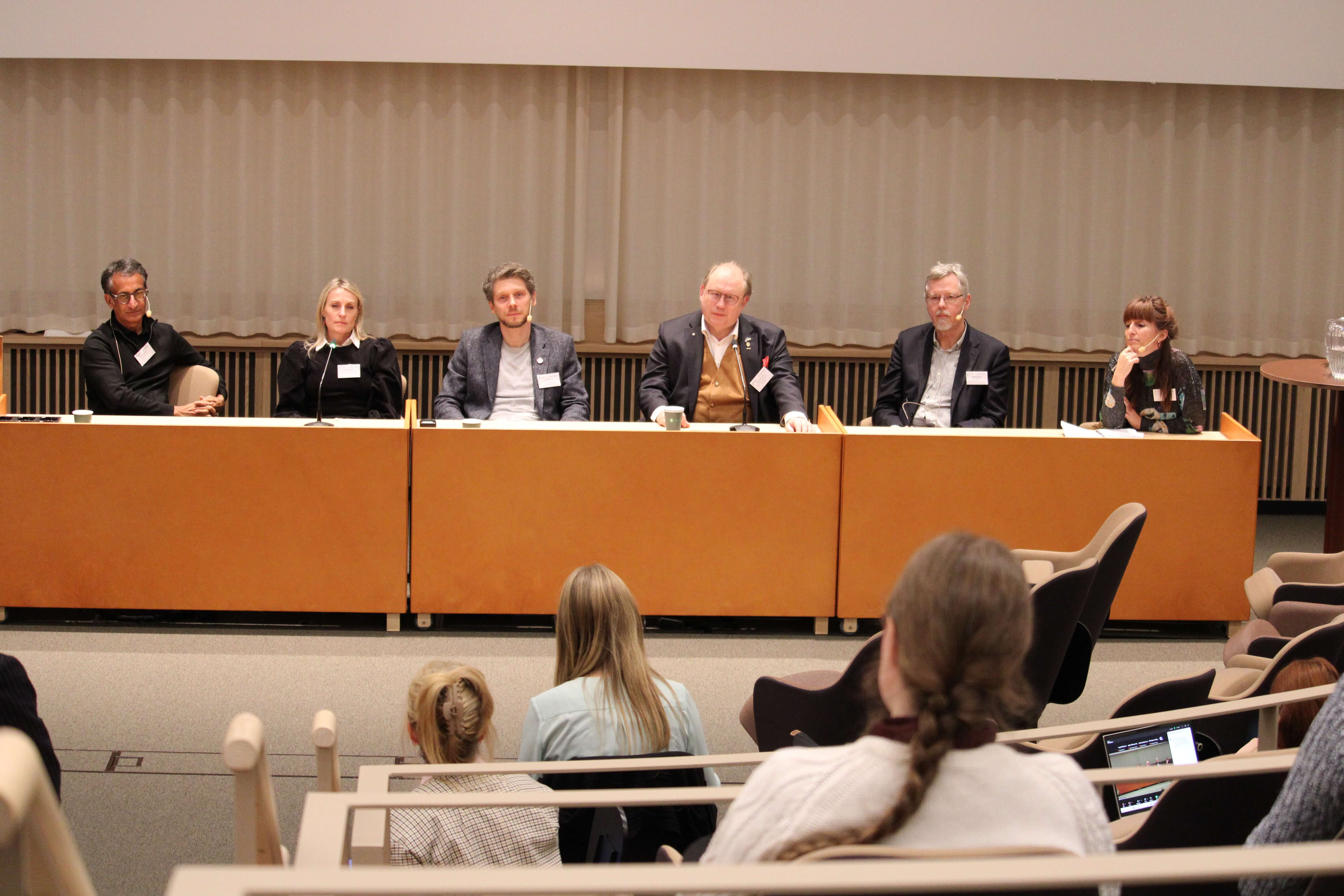
Parminder Raina, Paola Zaninotto, Arne Bethmann, Hugo Westerlund, Sölve Elmståhl, and Amaia Calderón-Larrañaga. Photo: Maria Yohuang.
Both sessions concluded with two interesting panel discussions led by Hugo Westerlund. In general, declining response rates in population studies are a global trend. Higher participation is typically observed among older individuals, those born in Nordic countries, and those with higher education, compared to younger individuals, people born outside the Nordic region, and those with lower education. Addressing non-response is challenging, but research suggests several strategies may help, e.g.,: 1) Conditional incentives offered only to those who actually respond or participate in the study; 2) Multiple reminders (up to a maximum of four or five) using a multi-modal approach such as letters, phone calls, and SMS; 3) Advance letter informing indiviudals they will soon be contacted to be part of a study.
The day finalized with the speakers and chairs gathering for a dinner at the restaurant Portal, where discussions on response rates and ways to improve them continued. A big thank you to all speakers, chairs, and participants for making this symposium a success!