October 15, 2020
Report from the webinar on Medical care of elderly during the Covid-19 pandemic
The webinar “Medical care of elderly during the Covid-19 pandemic, with eight months of experience” took place online on 12 October. The webinar (in English and Swedish) can be watched in full length below and the program here.
It was introduced by Professor Maria Eriksdotter and Ole Petter Ottersen, President of Karolinska Institutet. The opening lecturer was Professor Kaisu Pitkälä, University of Helsinki, who presented the successful Finnish work with controlling their Covid-19 outbreaks, their mobile testing teams and measures to mitigate the spread.
Experiences from the Stockholm geriatric health care was shared by Dr Martin Annetorp, who showed how useful data collection had been made despite the very difficult circumstances and Professor Dorota Religa, who pointed to the importance of frailty estimates in the care for the elderly.
In the final talk, Christian Molnar, head dr of the special care units in Stockholm, shared his experiences of the practical difficulties during the growing pandemic.
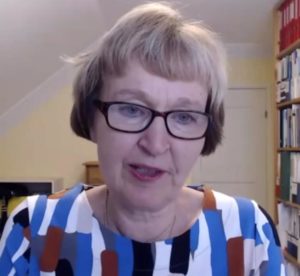
Professor Kaisu Pitkälä answering questions.