November 21, 2023
Symposium at SWEAH conference in Norrköping
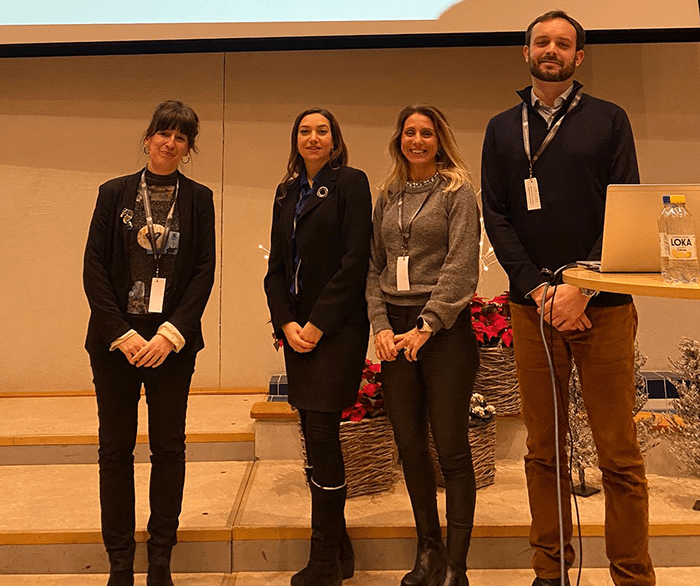
Photo of the presenters and chair. Photo: Mariam Kirvalidze
On November 21, NEAR attended and held a symposium at the Swedish Graduate School on Ageing and Health (SWEAH) conference in Norrköping. SWEAH is a multidisciplinary research school on aging and health, which Lund University coordinates. The theme of the conference was: “Interdisciplinary Perspectives on Sustainable Ageing” and was aimed at researchers at all levels of aging and health at SWEAH’s 13 partner universities.
The NEAR symposium “High-Quality Big Data for Geriatric Research: Experiences from the Swedish National E-infrastructure for Aging Research (NEAR)”, presented the infrastructure and research results from two NEAR projects. NEAR’s Scientific Promoter, Davide Liborio Vetrano, chaired the session. The Scientific Coordinator of NEAR, Debora Rizzuto, started by giving an overview of NEAR. She also addressed the importance and need for high-quality big data in longitudinal epidemiology, how NEAR works, and how to apply NEAR data.
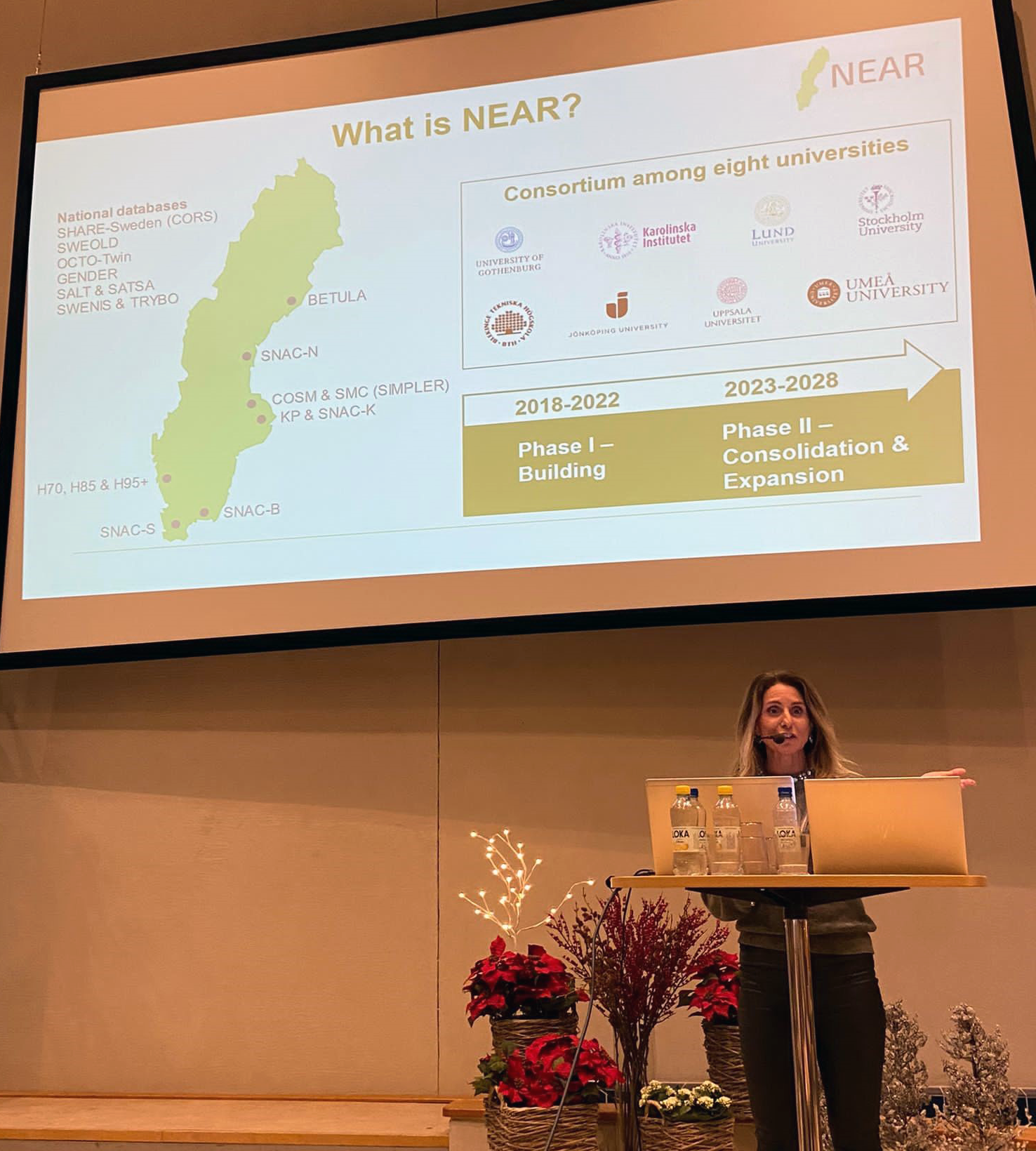
Photo of Debora Rizzuto. Photo: Mariam Kirvalidze
Shireen Sindi, Karolinska Institutet, presented results from the recently accepted NEAR study: “Sleep disturbances and cognition among older adults: A multicentre study of five Nordic cohorts“. This study aimed to explore the associations that exist between self-reported sleep disturbances and cognitive domains. Four NEAR population studies: the Gothenburg H70 Birth Cohort Study (H70); Kungsholmen Project (KP), Swedish National Study on Aging and Care in Skåne (SNAC-S), and Kungsholmen (SNAC-K), were used to explore this, as well as the Finnish study Cardiovascular Risk Factors, Aging and Dementia (CAIDE) study. In brief, various sleep disturbances, e.g., long sleep duration and excessive daytime napping (>2 hours) were associated with impaired cognitive abilities such as episodic memory, verbal fluency, perceptual speed, and executive functioning. In conclusion, targeting specific sleep behaviors, such as daytime napping in future lifestyle interventions for older adults can counteract cognitive decline.
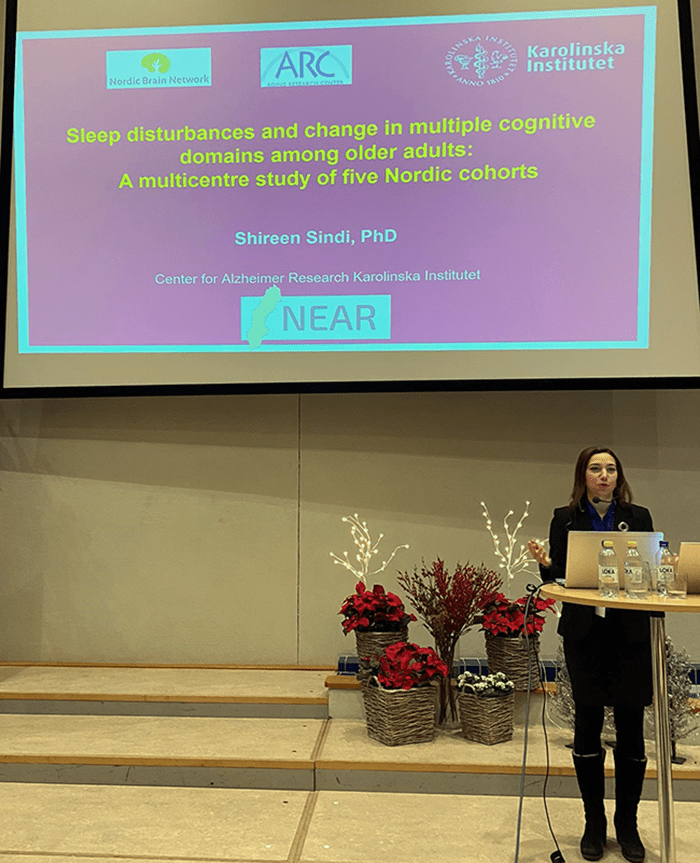
Photo of Shireen Sindi. Photo: Mariam Kirvalidze
This talk was followed by Amaia Calderón Larrañaga, Karolinska Institutet, who presented results from the project: “Prognostic value of the Health Assessment Tool (HAT): An external validation based on the Swedish National Study on Aging and Care in NEAR“. HAT is based on chronic diseases, walking speed, global cognition, and basic and instrumental disability. The purpose of the study was to examine HAT external validity in different population-based cohorts of older adults. To achieve this, the NEAR-based studies: the Swedish National Study on Aging and Care in Kungsholmen (SNAC-K), and two validation studies: the Swedish National Study on Aging and Care in Skåne (SNAC-S) and Nordanstig (SNAC-N) were used. The HAT’s external validity was acceptable in the two external populations. Overall, HAT can help prevent or delay functional decline and care dependency in the older population.
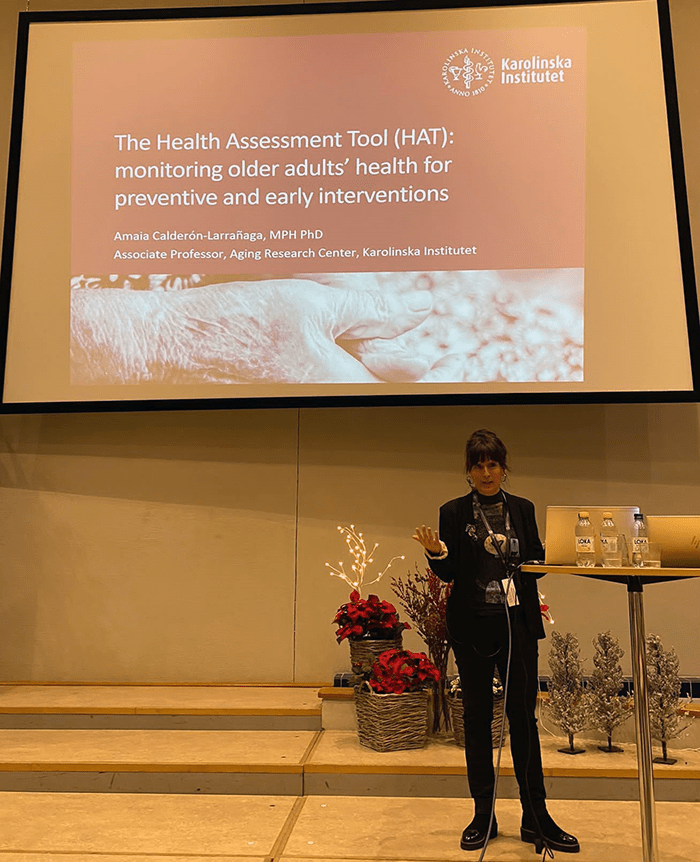
Photo of Amaia Calderón Larrañaga. Photo: Mariam Kirvalidze
The symposium resulted in meaningful interactions, creating valuable connections with prospective NEAR users throughout the SWEAH conference. This convergence of ideas and networking opportunities underscores the significance of collaborative efforts in advancing the understanding and utilization of NEAR data within the academic and research community.